
Treating Gout Flares in the Foot
A flare is the loudest moment on a gout timeline, and it is easy to treat it as the whole story. This piece covers the flare stage and the questions waiting just behind it, written for readers in Arlington Heights and the nearby suburbs.
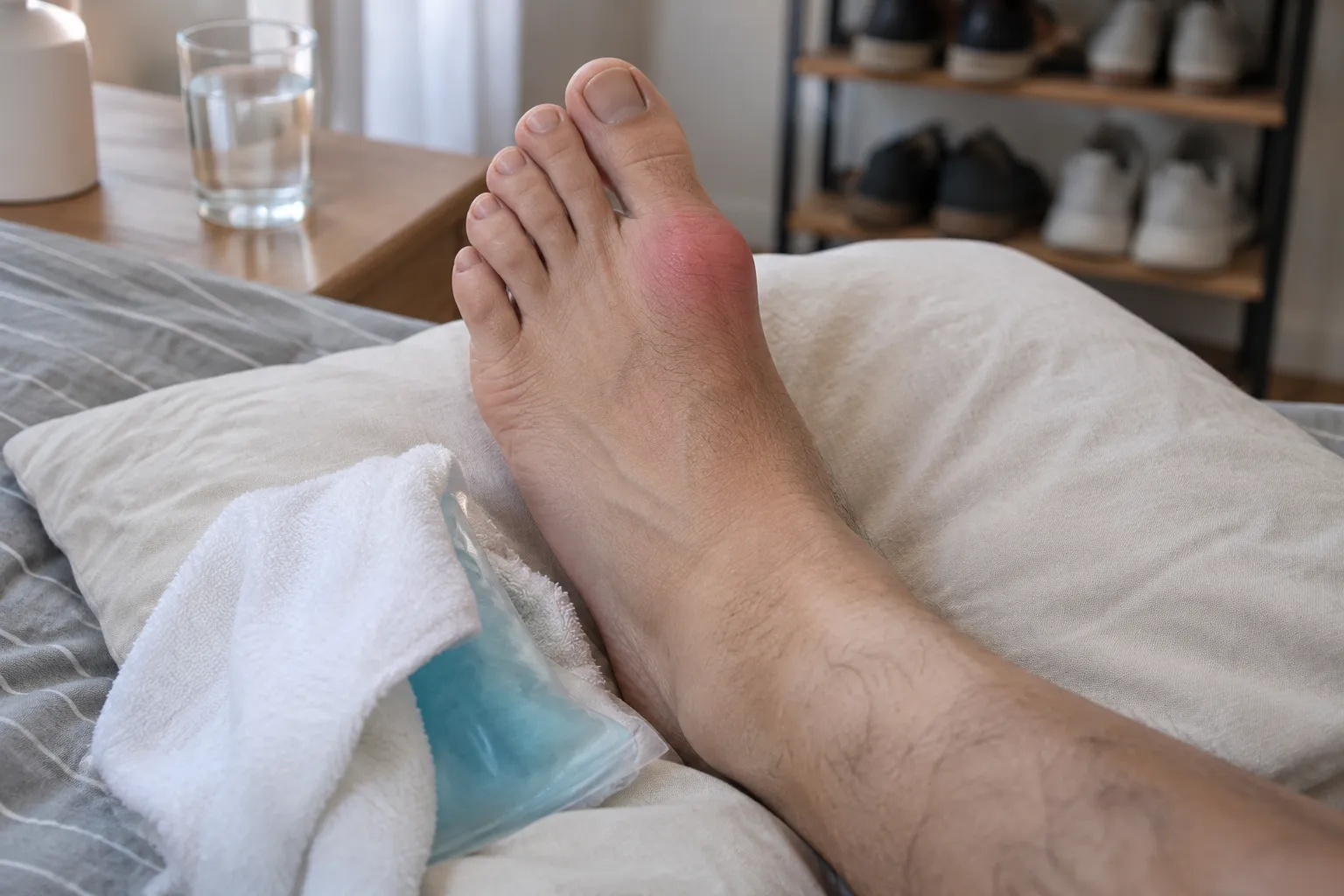
Where the flare sits on the timeline
Gout treatment has more than one job, and the jobs look further out as the list goes on. The Arthritis Foundation lists four aims:
- "Relieve pain and inflammation of acute attacks"
- "Reduce uric acid level to 6 milligrams per deciliter (6 mg/dL) or lower to reduce further attacks"
- "Prevent joint damage"
- "Preserve function and help you continue normal daily activities"
The first aim belongs to the flare itself. The other three reach beyond it, and that is where the long timeline gets decided.
What this stage asks of you
Right now the job is the first aim, which means getting the pain and inflammation of the attack addressed. Which medicines and which doses suit your foot is a decision for a clinician who has examined it. The foundation itself concedes that "Gout treatment can feel confusing", and a confused reader is better served by an exam than by a list from a website. For the foundation's wider page, see Treatments for Gout from the Arthritis Foundation.
Changes that mean the plan should move early
The second aim exists to reduce further attacks, so a flare that returns is the cue to ask about it. Raise the uric acid question at the next appointment instead of waiting to see whether another attack arrives. The same applies to the fourth aim: if a foot that used to carry you through a normal day no longer does, say so promptly.
What to decide before the next flare
Decisions are easier on a calm day. Settle who you will call when a flare starts, what you want to ask about uric acid, and what you want recorded after each attack. A flare diary with dates, which joint was involved, what you were doing and what helped gives a clinician something concrete to work from.
After the flare
Treat the flare as the opening of a conversation rather than the end of one. After the attack, the next stage is the longer plan that the foundation's four aims describe. This article stays with the flare. For a stage much further along the arthritis timeline, HSS publishes a page on ankle replacement surgery, how it works and recovery time.